

 Today, the Department of Homeland Security announced a final rule that adjusts fees for certain immigration and naturalization benefit requests to ensure U.S. Citizenship and Immigration Services recovers its costs of services.
As per DHS, they are adjusting USCIS fees by a weighted average increase of 20% to help recover its operational costs. Current fees would leave the agency underfunded by about $1 billion per year.
USCIS last updated its fee structure in December 2016 by a weighted average increase of 21%.
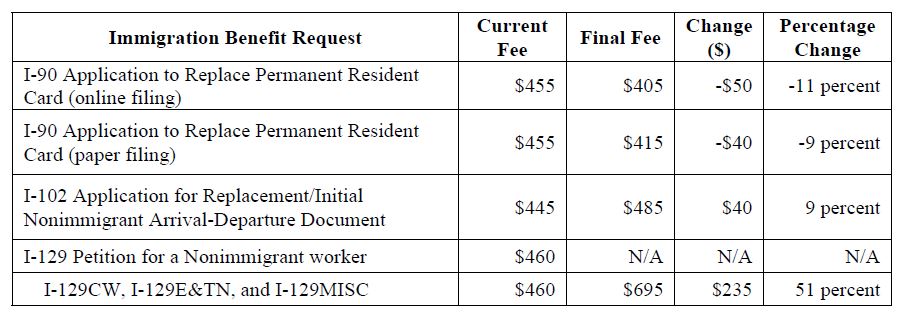
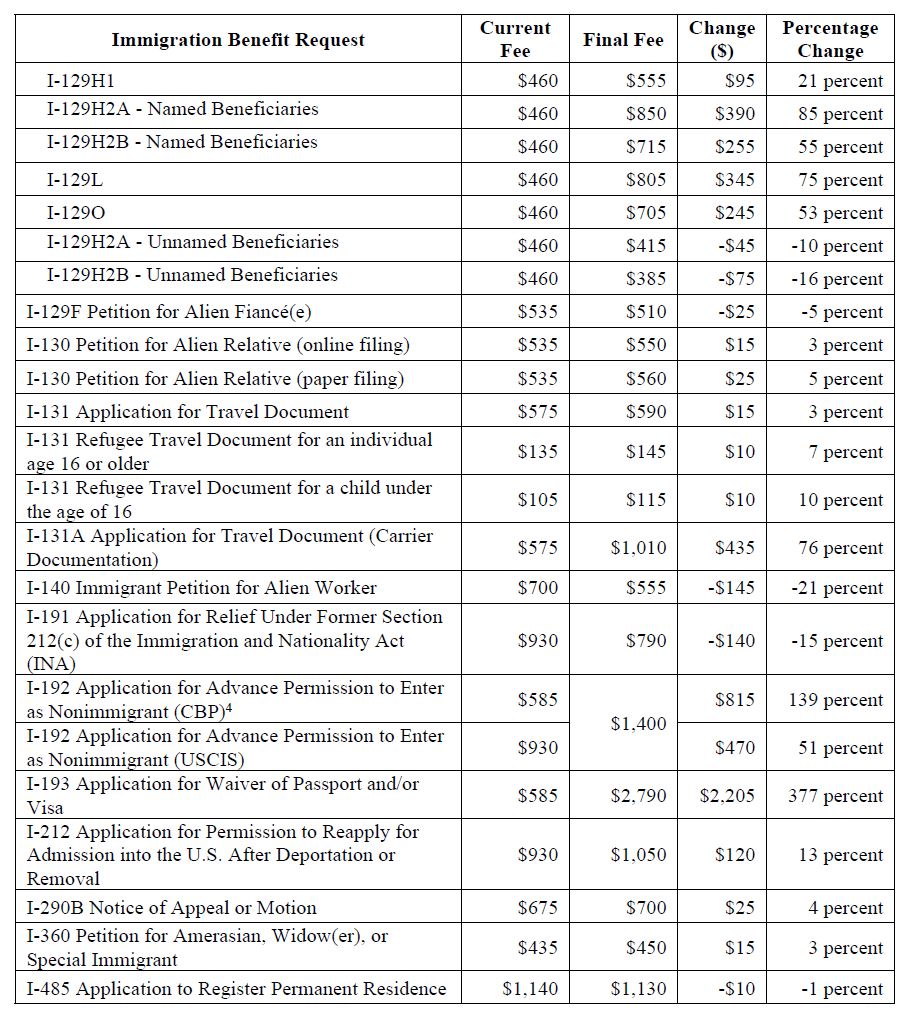
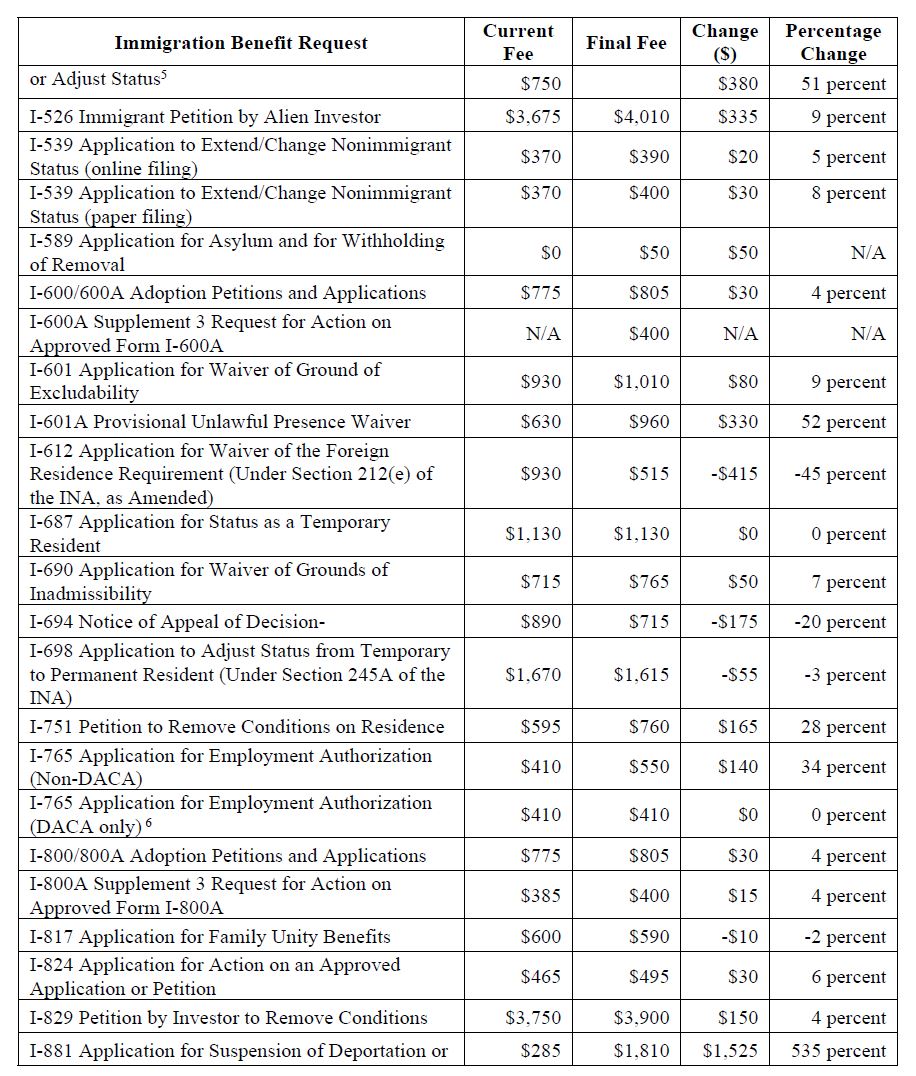
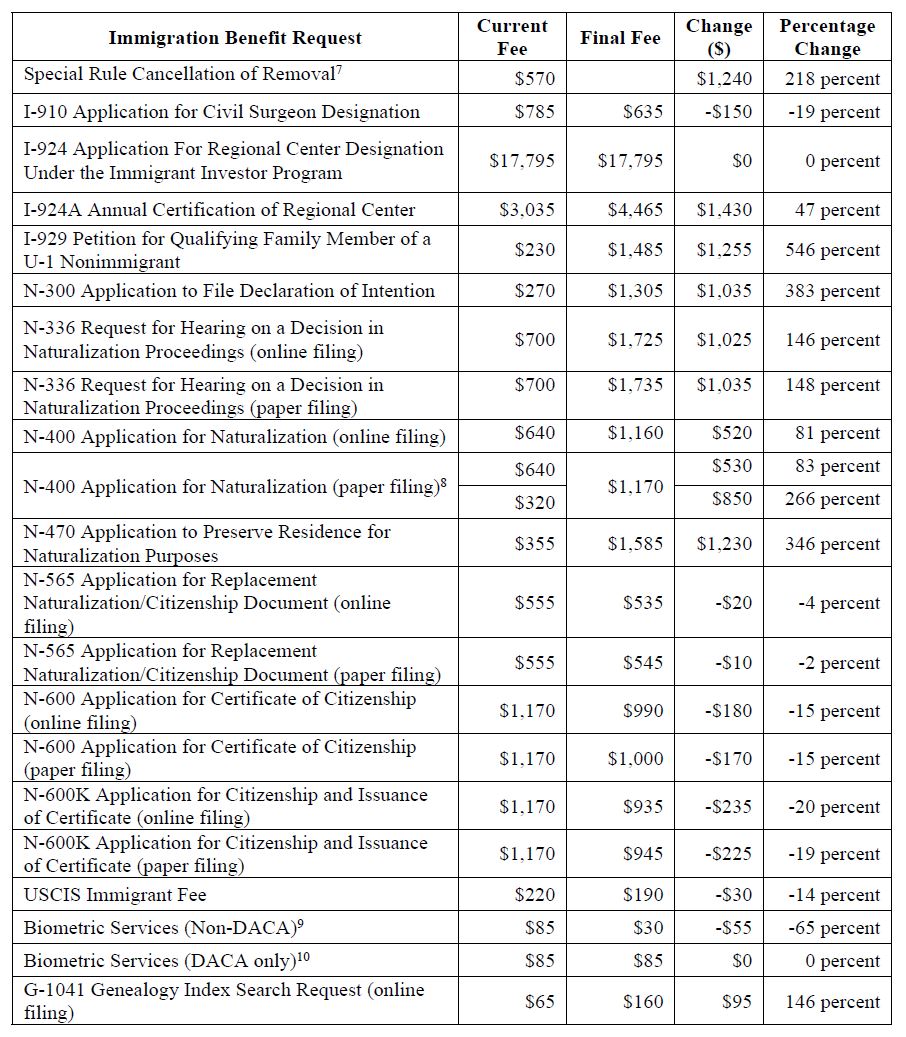
Advance copy of a final rule which significantly alters the USCIS fee schedule by adjusting fees by a weighted average increase of 20 percent, adding new fees, establishing multiple fees for nonimmigrant worker petitions, and limiting the number of beneficiaries for certain forms. Table 1, which begins on page 13 of this advance copy, summarizes the fee changes. The rule will be published in the Federal Register on 8/3/20 and will be effective 60 days from the date of publication.
A full list of changes and a complete table of final fees is listed below:
Today, the Department of Homeland Security announced a final rule that adjusts fees for certain immigration and naturalization benefit requests to ensure U.S. Citizenship and Immigration Services recovers its costs of services.
As per DHS, they are adjusting USCIS fees by a weighted average increase of 20% to help recover its operational costs. Current fees would leave the agency underfunded by about $1 billion per year.
USCIS last updated its fee structure in December 2016 by a weighted average increase of 21%.
Advance copy of a final rule which significantly alters the USCIS fee schedule by adjusting fees by a weighted average increase of 20 percent, adding new fees, establishing multiple fees for nonimmigrant worker petitions, and limiting the number of beneficiaries for certain forms. Table 1, which begins on page 13 of this advance copy, summarizes the fee changes. The rule will be published in the Federal Register on 8/3/20 and will be effective 60 days from the date of publication.
A full list of changes and a complete table of final fees is listed below:
Access insight, news and updates from across the Thomas V. Allen
WASHINGTON – U.S. Citizenship and Immigration Services (USCIS) announced today that it will now accept credit card payments for filing most of its forms. The new payment option is available for the 41 fee-based forms processed at USCIS Lockbox facilities. To pay by Visa, MasterCard, American Express or Discover, applicants will need to use Form […]
The Trump administration is weighing a significant expansion of current visa restrictions for foreign workers, widening the scope to include the highly skilled workers relied on by industries ranging from tech to healthcare. Several of President Donald Trump’s cabinet members and top advisers met on Tuesday [06/16/2020] afternoon to discuss a possible executive order […]
Employers will get a permanent option for verifying employment eligibility remotely beginning Aug. 1 under new Homeland Security Department regulations. The rule was released Friday ahead of the Aug. 30 expiration of temporary, Covid-19 era flexibility for employment verification. Companies that have used that option for the past three years have scrambled in recent weeks to review […]


 Appointment With